How to Fly With Orthopedic Implants Safely?
Can I fly with orthopedic implants? For many travelers, the answer is yes, but timing and medical condition matter. IATA’s 2024 World Air Transport Statistics recorded approximately 4.7 billion air passengers worldwide. Millions travel with joint replacements, fixation plates, spinal hardware, or other implants. The implant itself usually does not prevent flying. Recovery status does.
A healing incision, recent anesthesia, swelling, or limited mobility can change the risk. The CDC Yellow Book reports that long-distance travel may increase venous thromboembolism risk by roughly two to four times. The absolute risk remains low for most healthy travelers, but it is not zero. Your surgeon should assess wound stability, infection signs, pain control, walking ability, and prescribed blood-thinner use. A practical test helps: Can you walk safely to the gate and sit comfortably for several hours?
Airlines and airport security agencies may have different procedures. Carry your implant identification card, medication list, and relevant medical letter. Security screening may activate an alarm, but the device itself is not usually dangerous during screening. Ask for a private screening if touching the surgical area causes pain. During the flight, move your ankles regularly, drink normally, and request aisle seating or wheelchair assistance early. Compression stockings are not automatically suitable for everyone. Ask a clinician.
Some advice is imperfect. Recovery timelines vary. A “safe” date is never universal. This guide should support, not replace, personalized orthopedic and travel-medicine advice. Check current airline policies before departure, especially after major joint replacement or spinal surgery.
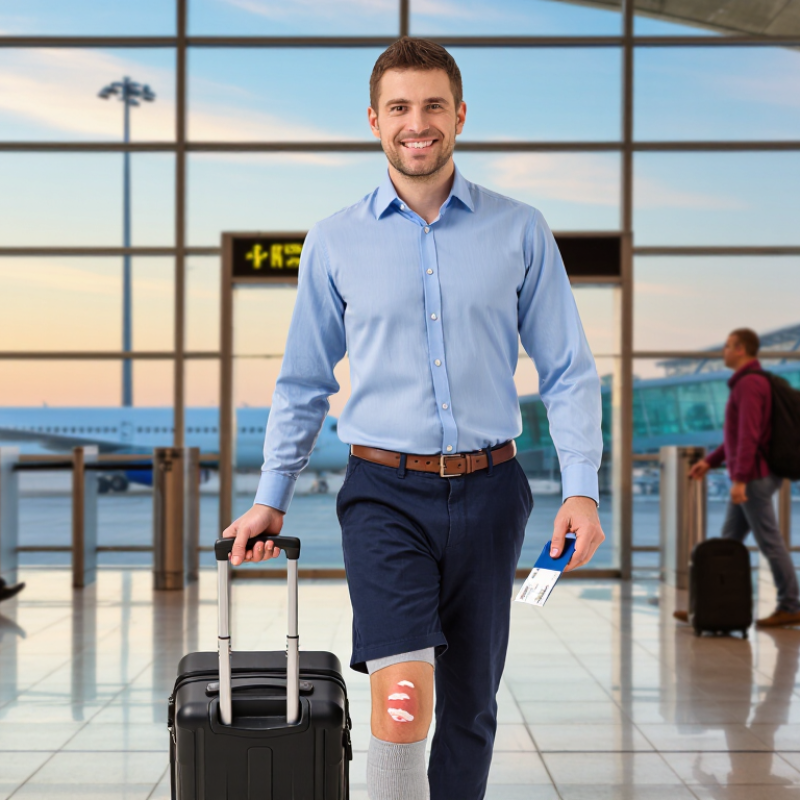
How to Fly With Orthopedic Implants Safely?
Understanding How Orthopedic Implants Affect Air Travel
Orthopedic implants usually do not react to cabin pressure or affect aircraft systems. Most passengers with joint replacements, plates, screws, or spinal hardware can fly safely. However, recovery stage matters more than the implant itself. Recent surgery may cause swelling, stiffness, or limited movement during a long flight. My practical advice is simple: ask your surgeon before booking, especially after major joint or spine surgery.
Airport security can be less predictable. Metal implants may trigger a detector, although not every implant does. Tell the security officer about your implant before screening begins. Carrying a medical letter may help explain the device, but it may not replace standard screening. Expect a possible pat-down or additional check. Allow extra time. Rushing through a busy terminal can increase discomfort and stress.
During the flight, keep the operated limb supported when possible. Move your ankle, bend your knee gently, or walk when your clinician permits it. Drink water, but follow any fluid restrictions from your medical team. Tight clothing can worsen discomfort. Compression garments may help some travelers, but they are not suitable for everyone. Blood-clot risk depends on surgery type, timing, health history, and flight duration. Do not assume an implant creates the risk by itself. I would not rely on internet advice alone here; confirm medication, movement, and seating needs with a qualified clinician. Pain can also be a warning, not merely an inconvenience.
Before flying with an orthopedic implant, check your medical readiness, not only your ticket. Your surgeon should confirm that the incision is closed, pain is controlled, and movement is safe. Ask about your implant type, recent surgery, swelling, and planned flight length. Recovery timelines vary widely. A person two weeks after knee replacement may need different advice from someone with an older spinal implant. Do not rely on online schedules alone.
Request written guidance if your healthcare professional recommends travel. Keep your implant card, medical records, and medication list accessible. Pack medicines in your carry-on bag, with enough extra doses for delays. Ask whether you need wound supplies, a mobility aid, or a blood-clot prevention plan. Airport screening usually detects metal implants, but staff may still ask questions. Documentation can reduce confusion, though it cannot replace medical approval.
Plan the airport route before leaving home. Reserve mobility assistance if walking through long terminals may increase pain or fatigue. During the flight, change position gently and follow your clinician’s exercise instructions. Avoid lifting heavy luggage with a healing shoulder or spine. Watch for increasing calf swelling, chest pain, breathing difficulty, fever, or wound drainage. Seek urgent medical care if these occur. The plan may feel excessive. Still, I would rather adjust a flight than ignore a warning sign. Recovery is not always predictable, and even careful travelers can misjudge their strength.
Use this readiness checklist before flying. A value of 1 means the item has been confirmed; 0 means it still needs attention. Your surgeon or treating clinician should make the final decision, especially after recent surgery or during a long-haul flight.
Preparing documents, devices, and medications for airport security can make travel less stressful. Carry a recent medical letter describing your orthopedic implant, surgery date, and mobility needs. An implant identification card may help, but it should not replace professional documentation. Keep these papers in your hand luggage, not inside checked baggage. Security officers may use screening methods that do not involve touching the implant.
Tips: Arrive early, explain your implant calmly, and ask for private screening if needed. Wear simple clothing and comfortable shoes. Keep prescribed medicines in their original labeled containers. Bring enough for the journey, plus a small backup supply approved by your healthcare provider. Store medicines in your carry-on bag, where temperature and access are easier to manage. Do not place medication in an unmarked container.
Mobility aids, braces, crutches, and battery-powered equipment may need separate inspection. Tell security staff before removing or adjusting any support device. Contact the airport and airline before departure if you need assistance or have limited movement. Rules can differ between airports, especially during international travel. I would not rely on an implant card alone; I once underestimated how quickly document checks can become confusing. A clear folder helps. Keep digital copies too, but do not assume internet access will always work. Ask your surgeon or pharmacist about pain medicine timing, travel swelling, and safe movement during a long flight.
Flying with an orthopedic implant is usually possible, but movement and discomfort require planning. The CDC Yellow Book reports that symptomatic venous thromboembolism occurs in roughly 1 out of 4,500 long-distance flights. Risk increases with prolonged sitting, recent surgery, and limited mobility. Ask your surgeon when flying is medically reasonable, especially after joint replacement or fracture repair.
Choose an aisle seat if possible. Every 60–90 minutes, stand and walk briefly, even if the cabin feels crowded. Perform ankle pumps and tighten your calf muscles while seated. Keep the operated limb supported, but avoid forcing the joint into one position. Loose clothing can reduce pressure around swelling. Drink water regularly, though excessive fluids create unnecessary bathroom trips. That small inconvenience may be worthwhile.
Pain often worsens when swelling increases. Carry prescribed medicine in your hand luggage, and follow the exact dosing instructions. Never add aspirin, anti-inflammatory drugs, or compression garments without medical advice. The American Academy of Orthopaedic Surgeons notes that swelling can persist for weeks after joint surgery, so a comfortable morning does not guarantee an easy flight. Cold packs are useful, but airport and cabin restrictions may limit access. Plan for that imperfect detail. Seek urgent care for sudden chest pain, severe breathlessness, fainting, or one-sided calf swelling. These symptoms should not be explained away as ordinary travel discomfort.
Flying with an orthopedic implant is often manageable, but recovery status matters more than the implant itself. Ask your surgeon before booking, especially after hip, knee, or spinal surgery. The CDC Yellow Book reports about one symptomatic venous thromboembolism per 4,656 flights lasting over four hours. Recent surgery can increase that risk. It is easy to underestimate swelling after sitting. I have seen travelers dismiss one enlarged calf as ordinary post-flight stiffness.
Seek emergency medical care for chest pain, sudden breathlessness, coughing blood, faintness, or a racing heartbeat. These symptoms may indicate a pulmonary embolism. Urgent assessment is also needed for new one-sided calf swelling, warmth, redness, or severe pain. Do not massage the leg while waiting for medical advice.
Contact your surgical team quickly if the operated joint becomes suddenly more painful, unstable, hot, or difficult to move. Fever, wound drainage, spreading redness, or a new clicking sensation also deserves attention. These signs can suggest infection, bleeding, or a mechanical problem. The American Academy of Orthopaedic Surgeons advises reporting worsening pain and wound changes after joint replacement. Its guidance is useful, but not perfect for every patient. Implant type, surgery date, medication, and mobility all change the decision. Keep discharge papers and an implant card accessible. If symptoms feel unusual, seek help rather than waiting for the flight soreness to disappear.
Ask your surgeon to confirm that the incision is closed, pain is controlled, and movement is safe. Recovery differs widely. Do not rely on online timelines alone.
Keep a recent medical letter, implant details, surgery date, medical records, and medication list in your carry-on bag. Keep digital copies too. Internet access may fail.
Keep medicines in their original labeled containers. Bring enough for the trip and a small approved backup supply. Ask your healthcare professional about timing and storage.
Screening may detect metal implants, but staff might ask questions. Explain the implant calmly and request private screening if needed. An implant card helps, but it is not enough alone.
Tell security staff before removing or adjusting support devices. These items may need separate inspection. Contact the airport before departure if movement is limited.
Plan the route before leaving home. Reserve mobility assistance for long terminals. During the flight, change position gently and follow your clinician’s exercise instructions.
Avoid lifting heavy luggage while healing. Ask for assistance with bags. A small suitcase may still feel surprisingly heavy.
Seek urgent care for increasing calf swelling, chest pain, breathing difficulty, fever, or wound drainage. Do not ignore warning signs. Recovery can be unpredictable.
Flying with orthopedic implants is often possible, but preparation is essential. If you are asking, “Can I fly with orthopedic implants,” the answer depends on your recovery stage, the type of implant, your overall health, and your healthcare provider’s advice. Before traveling, confirm that your wound is healing properly, pain and swelling are controlled, and you can move safely. Ask whether flight timing, cabin pressure, or prolonged sitting may affect your condition, especially after recent surgery.
Prepare medical records, implant information, prescriptions, and mobility-related documents in an easily accessible place. Allow extra time at the airport and inform security staff about your implant so screening can be handled appropriately. During the journey, follow movement instructions, change position regularly, perform approved exercises, stay hydrated, and use prescribed medication only as directed. Wear comfortable clothing and consider assistance if walking is difficult. After flying, seek medical help for worsening pain, unusual swelling, redness, drainage, fever, breathing problems, or sudden leg discomfort, as these may require prompt evaluation.

Pure Orthopedic Implants