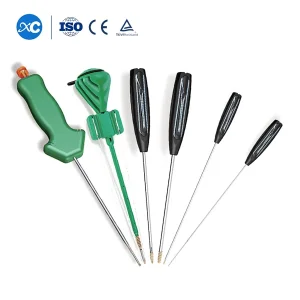
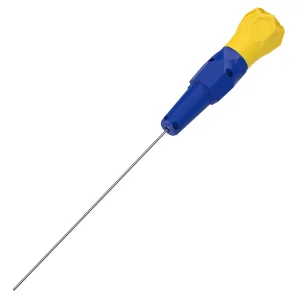
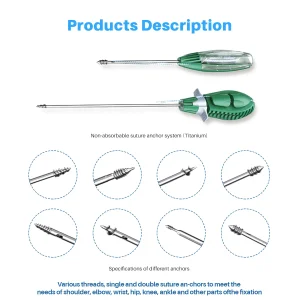
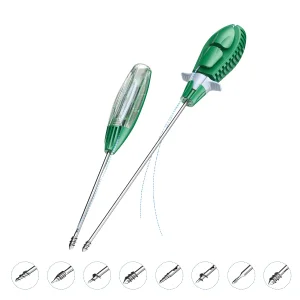
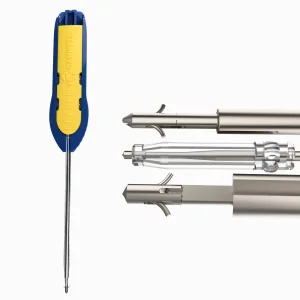
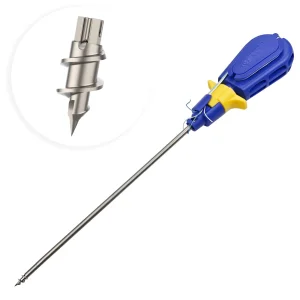
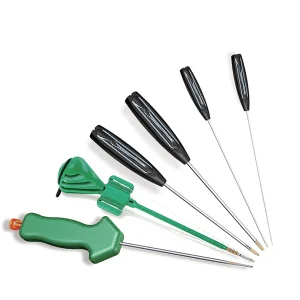
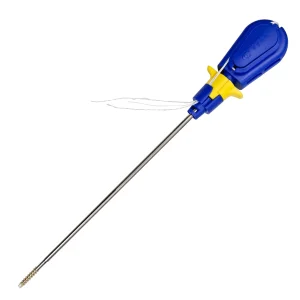
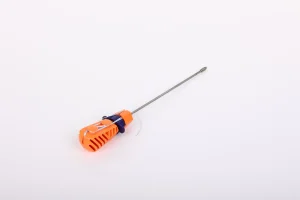
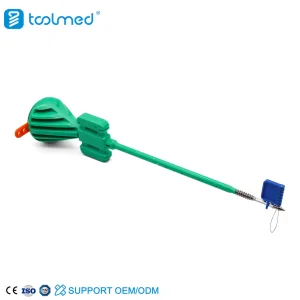
The global sports medicine market is witnessing a paradigm shift. Traditionally, metal suture anchors (Titanium or Stainless Steel) were the gold standard for reattaching soft tissue to bone. However, the rise of Bioabsorbable Suture Anchors has redefined clinical outcomes. In today’s orthopedic landscape, surgeons increasingly prefer materials that provide temporary stability and then gradually disappear, allowing for natural biological healing without leaving permanent hardware in the patient's body.
Technically, these anchors are composed of advanced polymers such as PLLA (Poly-L-lactic acid), PGA (Polyglycolic acid), or biocomposites like PLDLA combined with Hydroxyapatite (HA). The global market, currently valued in the billions, is projected to grow significantly as the aging population seeks to remain active and professional athletes demand faster, more "natural" recovery protocols. North America and Europe remain the largest consumers, but the Asia-Pacific region, spearheaded by China's manufacturing prowess, is the fastest-growing hub for production and innovation.
Moving beyond simple polymers to materials that actively promote osteoconduction, allowing bone to grow into the anchor site.
The shift toward knotless designs reduces surgical time and eliminates the risk of "knot stacks" causing joint irritation.
Smaller footprint anchors allow for multiple fixation points in complex repairs like 360-degree labral tears.
Factories are now offering OEM services to create site-specific anchors for foot, ankle, and hand surgeries.
While bioabsorbable materials are the future, PEEK (Polyetheretherketone) remains a critical bridge. It offers a modulus of elasticity similar to bone and is radiolucent, meaning it doesn't interfere with MRI or CT scans. As a top-tier China Bioabsorbable Suture Anchors Factory, we integrate these material sciences into our production lines to offer surgeons a complete toolkit.
Our research and development team focuses on the "Degradation Profile." A perfect anchor must maintain its pull-out strength for at least 6-12 weeks—the critical window for tendon-to-bone healing—before starting its absorption process. By controlling the molecular weight of our polymers, we ensure clinical reliability that rivals global brands like Arthrex or Smith & Nephew.
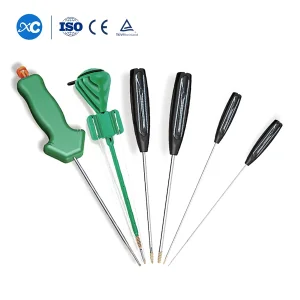
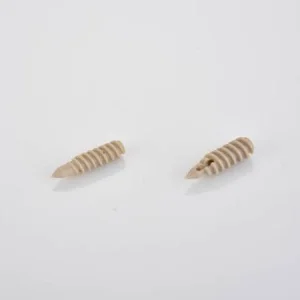
High-Performance PEEK Anchor System
Procurement officers in modern hospitals and distribution hubs are no longer just looking for the lowest price. They are looking for Supply Chain Resilience. With the disruptions seen in global logistics over the last few years, having a reliable partner in China—the world’s manufacturing powerhouse—is a strategic necessity.
Common Procurement Scenarios:
Localized applications vary. In regions with high obesity rates, anchors with higher pull-out strength are prioritized. In markets with younger demographics (active sports cultures), bioabsorbable options that leave no "artifact" in the joint are the primary choice. As a leading manufacturer, we adapt our inventory to match these regional demands.
Arthroscopic reconstruction of the Anterior Cruciate Ligament (ACL) requires more than just an anchor; it requires a system. Our Interference Screws and suture anchors are designed to work in harmony with standard surgical instruments. Whether it's a "bone-patellar tendon-bone" graft or a "hamstring" graft, our implants provide the rigid fixation needed for early mobilization.
Our commitment to excellence means every anchor undergoes rigorous quality checks, from tensile strength testing to biocompatibility verification in accordance with ISO 13485 standards.
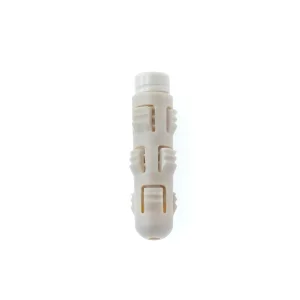
Bioabsorbable Interference Screw for ACL Repair
Combining Scale, Innovation, and Rigorous Standards
The company is committed to producing and selling advanced medical devices, equipment, and disposable medical supplies. Our product range primarily includes the production and sale of instruments for otolaryngology, orthopedics, urology, abdominal surgery, gynecology, and related disposable equipment, as well as sports and fitness equipment. The main focus is on orthopedic devices: implants, mechanical equipment, etc.
Our team of experts is dedicated to ensuring that our products meet the highest standards of quality and safety. We pride ourselves on our commitment to excellence in every aspect of our business. From the sourcing of medical-grade raw materials to the final sterile packaging, every step is optimized for patient safety.
The journey of the suture anchor began in the 1980s, fundamentally changing how orthopedic surgeons approached soft tissue repair. Before the advent of these tiny yet powerful devices, surgeons had to drill tunnels through bone and tie sutures over "bone bridges," a process that was technically demanding and often led to less-than-ideal outcomes. The introduction of metal anchors was the first revolution, but it brought challenges: permanent hardware often caused imaging artifacts on MRIs, and in some cases, the metal would migrate or cause bone resorption. This led to the second revolution: Bioabsorbable Suture Anchors.
Our factory utilizes several advanced polymers to meet clinical needs. The most common is Poly-L-lactic Acid (PLLA). PLLA is favored for its slow degradation rate and high initial strength. As the PLLA anchor sits in the body, it undergoes hydrolysis—a process where water molecules break down the polymer chains into lactic acid, which is then metabolized by the liver into CO2 and water. This is the ultimate "leave no trace" surgery.
However, pure PLLA can sometimes be too brittle. To address this, we use PLDLA, which is a copolymer that offers a more flexible degradation profile and better impact resistance. For the most advanced clinical applications, we manufacture Biocomposite Anchors. These contain Ceramic additives like Beta-Tricalcium Phosphate (β-TCP) or Hydroxyapatite. These minerals act as a scaffold, encouraging the patient's own bone cells to grow into the anchor as it disappears. This process, known as osteoconduction, results in a repair that is literally as strong as the original anatomy.
While often associated with the shoulder, bioabsorbable anchors are used from head to toe. In Shoulder Arthroscopy, they are the primary tool for Rotator Cuff repairs and Bankart repairs (addressing shoulder instability). The ability to place multiple small anchors around the glenoid rim without worrying about metal-on-metal contact is a major advantage for surgeons.
In the Knee, apart from ACL/PCL reconstruction, these anchors are used for meniscal repairs and medial patellofemoral ligament (MPFL) reconstruction. The "low profile" nature of our China-manufactured anchors makes them ideal for the tight spaces of the knee joint. Furthermore, the Foot and Ankle market is exploding. Procedures like the Brostrom repair for chronic ankle instability now utilize small, 2.8mm or 3.0mm bioabsorbable anchors to restore mobility to active patients.
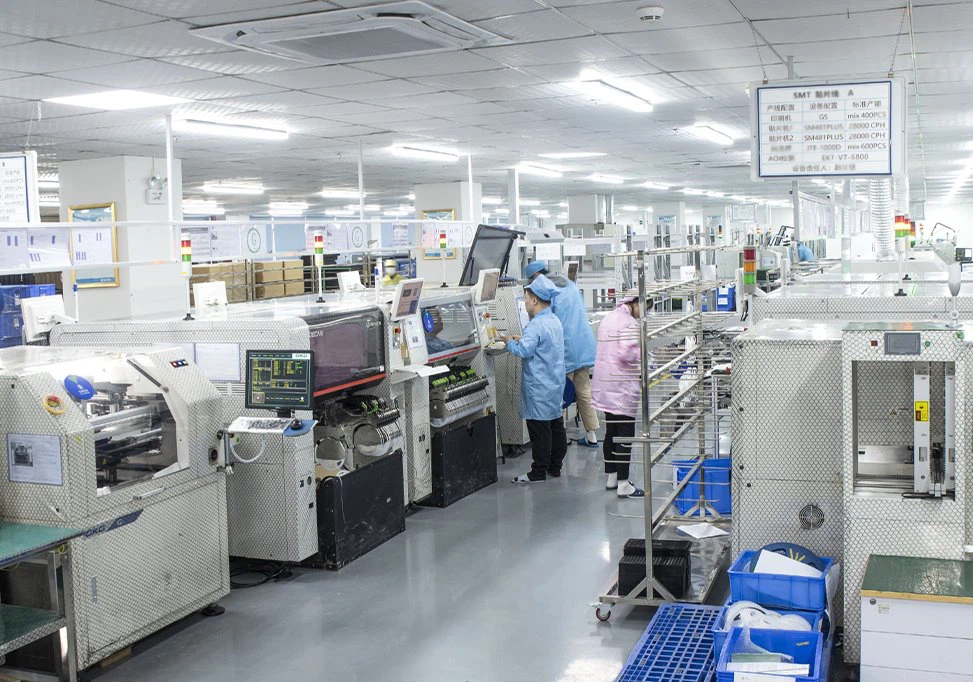
Many international buyers ask: Why source from a Chinese factory rather than a local distributor? The answer lies in the intersection of Technological Agility and Economic Efficiency. Our facility in China is not just a workshop; it is a high-tech ecosystem. We utilize multi-axis CNC Swiss-turning machines that can produce anchors with tolerances measured in microns. This precision ensures that the threads of the anchor engage perfectly with the bone, providing the high pull-out strength that surgeons demand.
Moreover, our vertical integration allows us to keep costs down. We handle everything from the purification of the raw polymers to the sterilization (Gamma or EO) and final packaging. For a global distributor, this means higher margins and the ability to offer competitive pricing in hospital tenders without sacrificing quality. We also offer extensive OEM and ODM services. If a surgical team in Europe wants a specific handle design or a unique suture configuration (like high-strength UHMWPE sutures), we can prototype and produce it faster than almost any other manufacturer in the world.
Medical devices are among the most regulated products on earth. Our factory adheres to the ISO 13485 quality management system, which is the international standard for medical device manufacturing. Every batch of bioabsorbable suture anchors we produce undergoes "Pull-out Strength Testing" in bone-analog foam to ensure they can withstand the forces of a recovering patient. We also conduct "In-vitro Degradation Studies" to verify that the anchors break down at the correct rate. When you buy from Pure THC Medical, you are buying peace of mind.
Looking forward, the industry is moving toward "Smart Implants." At our R&D center, we are exploring the use of 3D printing (Additive Manufacturing) to create anchors with complex internal lattice structures that speed up bone ingrowth. We are also looking at how AI can help surgeons select the perfect anchor size and placement based on preoperative MRI scans. By staying at the forefront of these technologies, we ensure that our partners are always offering the most advanced solutions to their patients.
Choosing the right manufacturer for Bioabsorbable Suture Anchors is a decision that impacts patient lives. As a leading factory in China, we combine the best of material science, precision engineering, and global logistics to provide a product that surgeons trust and patients benefit from. Whether you are a large-scale distributor or a specialized surgical center, we invite you to explore our range and join us in advancing the future of sports medicine.
 Pure Orthopedic Implants