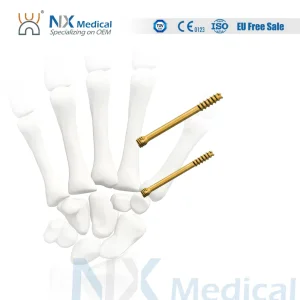
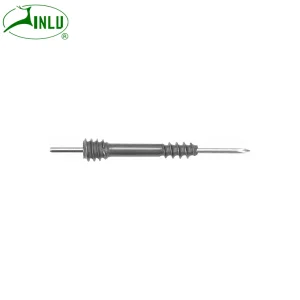
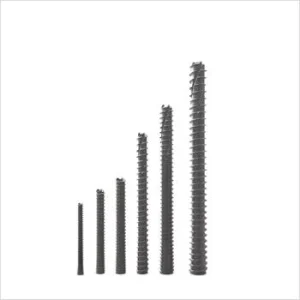
In the contemporary realm of orthopedic surgery, the Headless Compression Screw (HCS) has emerged as a cornerstone technology for internal fixation. These specialized fasteners are designed specifically to provide stable compression while being fully embedded within the bone or articular cartilage, minimizing soft tissue irritation and hardware prominence.
Globally, the market for headless compression screws is witnessing a significant CAGR (Compound Annual Growth Rate) driven by an aging population, the rising incidence of sports-related injuries, and advancements in trauma care. From the scaphoid in the wrist to the small bones of the foot, these screws are indispensable for surgeons aiming for primary healing and early mobilization of patients.
The industrial status of HCS manufacturing has transitioned from traditional machining to high-precision CNC (Computer Numerical Control) swiss-turning and additive manufacturing. China has positioned itself as a world-leading hub for these high-tech medical devices, offering an unparalleled balance of medical-grade material quality and cost-efficient production scales.
Our Mission: The company is committed to producing and selling advanced medical devices, equipment, and disposable medical supplies. Our product range primarily includes the production and sale of instruments for otolaryngology, orthopedics, urology, abdominal surgery, gynecology, and related disposable equipment, as well as sports and fitness equipment. The main focus is on orthopedic devices: implants, mechanical equipment, etc.
The industry is moving toward PLLA/PGA absorbable screws that eliminate the need for secondary removal surgeries, reducing patient risk and healthcare costs.
AI-driven quality control and 3D titanium printing allow for patient-specific screw lengths and thread pitches tailored to individual bone density.
Surgical navigation systems and robotic-assisted placement are becoming standard, requiring screws with extremely tight tolerances for compatible instrumentation.
International procurement managers from hospitals and medical distribution companies face the challenge of balancing stringent regulatory compliance with budget constraints. China’s orthopedic manufacturing sector has evolved beyond simple replication to genuine innovation.
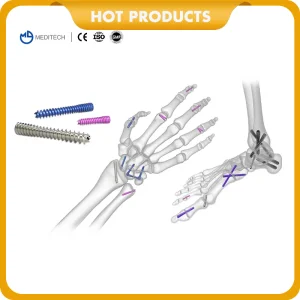
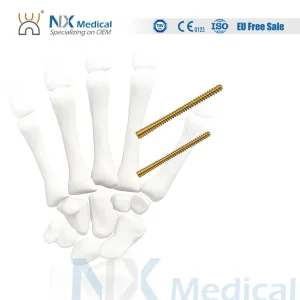
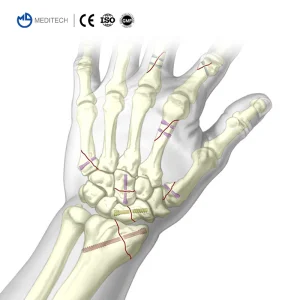
The scaphoid fracture is a classic indication for headless screws. Our micro-cannulated designs allow for percutaneous insertion, preserving blood supply to the bone and ensuring a high union rate. The absence of a screw head prevents impingement in the radial-carpal joint.
In Bunion (Hallux Valgus) corrections and ankle arthrodesis, HCS technology provides the rigid internal stability needed for early weight-bearing. Our larger diameter headless screws are optimized for the higher torque required in these distal extremities.
Osteochondral fractures and ACL avulsions require low-profile fixation that won't irritate surrounding ligaments. Our screws offer a "zero-profile" solution that stays out of the way of rehabilitative motion.
Expert Team: Our team of experts is dedicated to ensuring that our products meet the highest standards of quality and safety. We pride ourselves on our commitment to excellence in every aspect of our business.
Advanced instruments for minimally invasive procedures, ensuring patient safety and surgical precision.
Specialized tools designed for delicate anatomical structures, meeting global clinical standards.
High-quality medical supplies for one-time use, reducing cross-contamination risks in hospital settings.
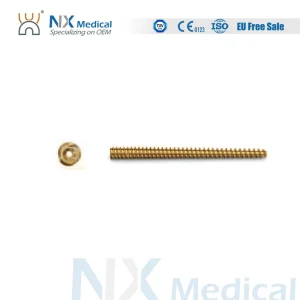
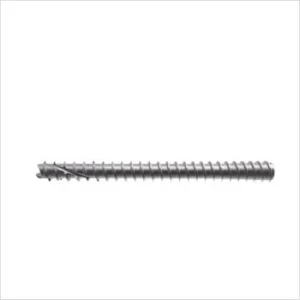
The magic of the Headless Compression Screw lies in the Differential Pitch. The leading threads have a wider pitch than the trailing threads. As the screw is driven across the fracture line, the trailing threads advance more slowly than the leading threads, naturally pulling the two bone fragments together. This "auto-compression" is what makes these screws superior to standard headed screws in many trauma scenarios.
Furthermore, the cannulated design allows surgeons to place a guide wire first, verifying position via fluoroscopy before the final screw is implanted. This accuracy is vital in intra-articular fractures where a misplaced screw could lead to permanent joint damage.
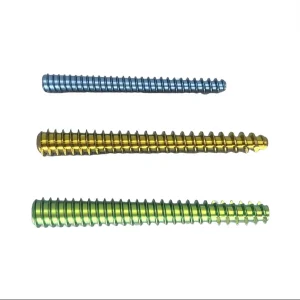
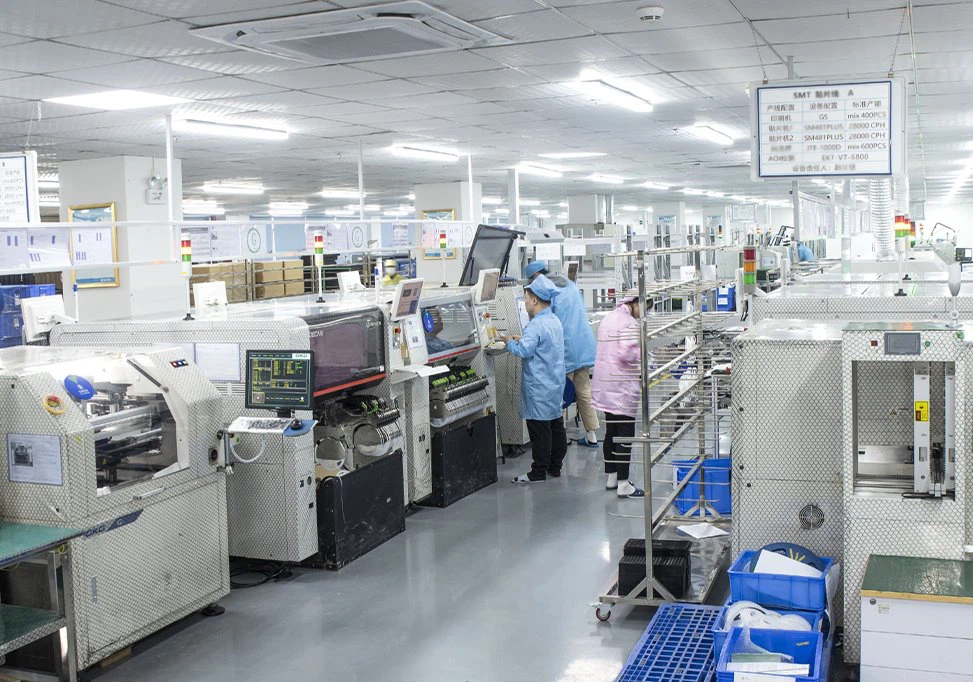
Our factory utilizes secondary finishing processes such as electropolishing and anodic oxidation. These treatments not only enhance the fatigue strength of the titanium but also allow for color-coding of different screw diameters, aiding surgical teams in quick identification during high-pressure operating room environments.
 Pure Orthopedic Implants