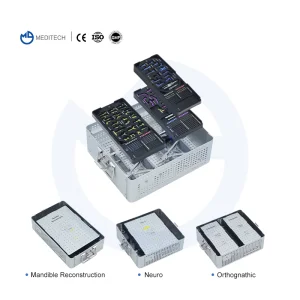
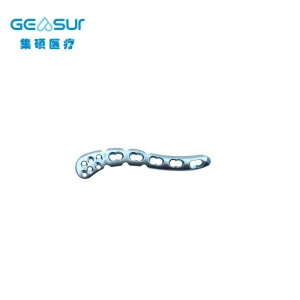
The global orthopedic implant market is witnessing a paradigm shift, with Anterior Lumbar Interbody Fusion (ALIF) Titanium Cages standing at the forefront of this evolution. As spinal disorders increase due to aging populations and sedentary lifestyles, the demand for high-performance fusion devices has skyrocketed. Historically, PEEK (Polyetheretherketone) dominated the market, but the medical community is now returning to titanium—specifically 3D-printed porous titanium—due to its superior osseointegration capabilities.
In the current industrial climate, ALIF procedures are preferred for their ability to provide direct access to the disc space, allowing for a larger cage footprint which maximizes stability and height restoration. Titanium, known for its biocompatibility and high strength-to-weight ratio, has been redesigned through additive manufacturing to mimic the modulus of human trabecular bone, significantly reducing the risk of stress shielding and implant subsidence.
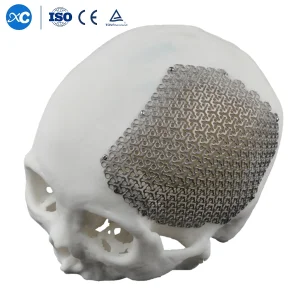
Modern ALIF Titanium Cages are no longer solid blocks of metal. Our Chinese manufacturing facility utilizes cutting-edge Electron Beam Melting (EBM) and Selective Laser Melting (SLM) technologies to create complex lattice structures. These "Bio-mimetic" designs allow for bone ingrowth directly through the implant, creating a biological bond that PEEK simply cannot achieve.
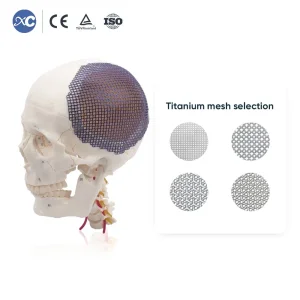
As a leading China ALIF Titanium Cages manufacturer, we integrate these global trends into our R&D, ensuring our products meet the rigorous demands of surgeons in North America, Europe, and Asia-Pacific regions. Our commitment to innovation is reflected in our 3D-printed portfolio, which offers varying porosity levels to optimize healing.
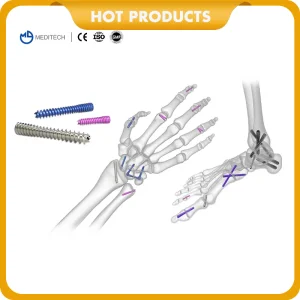
Explore our specialized compression screw systems →Current research emphasizes "nano-roughness." Our titanium cages undergo specialized acid-etching or plasma-spraying to create a surface that attracts osteoblasts, accelerating the fusion process within the first weeks post-op.
The industry is moving toward "standalone" ALIF cages that incorporate integrated screw fixation. This eliminates the need for bulky anterior plates, reducing surgical time and potential irritation to adjacent vascular structures.
With AI and advanced imaging, we can now manufacture patient-specific ALIF cages that match the unique lordotic angle and endplate anatomy of the individual, ensuring a perfect fit and maximum contact area.
International hospital groups and orthopedic distributors require more than just a product; they require a reliable supply chain. Our factory provides OEM and ODM services for ALIF Titanium Cages, ensuring that technical specifications—such as lordosis angles from 6° to 18° and various heights—are met with precision.
We understand the regulatory hurdles in different markets. Our quality management system is ISO 13485 certified, and our products undergo rigorous fatigue testing according to ASTM F2077 and F2267 standards. By choosing a China-based supplier like us, global partners benefit from a 30-50% cost reduction without compromising on surgical grade titanium (Ti-6Al-4V ELI).
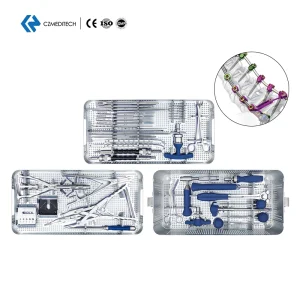
View our Locking Plate Systems →In regions like Southeast Asia, Latin America, and the Middle East, there is a growing need for affordable yet high-quality spinal implants. As a China Top ALIF Titanium Cages Manufacturer, we bridge the gap between high-end German/American technology and the budget constraints of developing healthcare systems. Our localized support includes providing surgical instrument sets that are intuitive and durable, reducing the learning curve for surgeons.
Why Source from our Chinese Factory?
The company is committed to producing and selling advanced medical devices, equipment, and disposable medical supplies. Our product range primarily includes the production and sale of instruments for otolaryngology, orthopedics, urology, abdominal surgery, gynecology, and related disposable equipment, as well as sports and fitness equipment. The main focus is on orthopedic devices: implants, mechanical equipment, etc.
Our Products: Urology Instruments; Laparoscopic Instruments; Gynecology Instruments; Otolaryngology Instruments; Orthopedic Instruments; Disposable Instruments; Devices
Our team of experts is dedicated to ensuring that our products meet the highest standards of quality and safety.
Why choose Pure?
Our company specializes in the production and sale of medical devices, and we pride ourselves on our commitment to excellence in every aspect of our business. We leverage advanced manufacturing techniques to provide the orthopedic community with reliable, cost-effective titanium solutions.
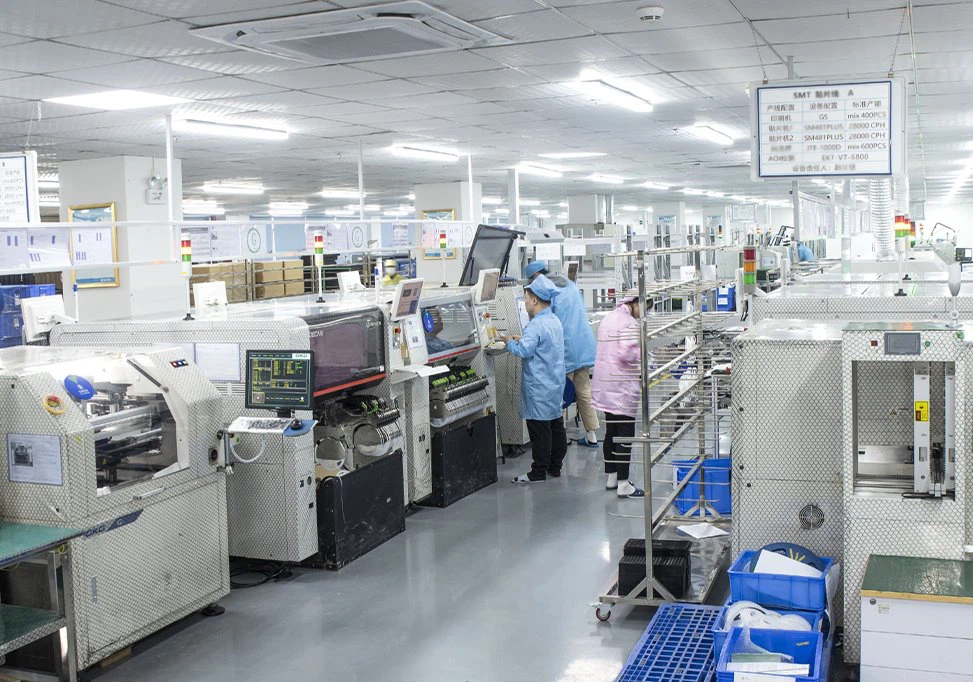
Extended range of surgical implants and instruments
The strategic importance of ALIF (Anterior Lumbar Interbody Fusion) in treating degenerative disc disease, grade I or II spondylolisthesis, and revision of failed posterior fusions cannot be overstated. By accessing the spine from the front, surgeons can avoid the large muscle groups of the back, leading to less post-operative pain and a faster recovery for the patient. However, the success of this procedure relies heavily on the quality of the titanium cage used. A high-quality Titanium ALIF cage must provide immediate mechanical stability through its large footprint and teeth-like serrations on the superior and inferior surfaces to prevent migration.
In the global market, the shift toward 3D-printed titanium has been fueled by clinical evidence showing that porous metal implants significantly improve the fusion rate compared to solid PEEK cages. The interconnected pores of our 3D-printed cages promote the migration of bone-forming cells, allowing for true biological fixation. This is particularly critical in patients with compromised bone quality, such as those with osteoporosis or smokers, where traditional fusion methods might fail. As a leading supplier in China, we have invested heavily in laser-sintering technology to ensure that every cage we produce has a precisely controlled pore size (typically between 300-600 microns), which is the "sweet spot" for human bone ingrowth.
Furthermore, the industrial trend is moving toward "Integrated Fixation." Our engineering team is currently developing the next generation of ALIF cages that feature divergent screw holes, allowing the cage to be anchored directly into the vertebral bodies. This standalone capability is a game-changer for surgeons, as it simplifies the procedure and reduces the risk of complications associated with secondary posterior fixation. Our factory's ability to pivot and adapt to these surgical trends is what makes us a preferred partner for global medical device distributors.
Global procurement teams often face the challenge of balancing quality with cost. The orthopedic implant industry has traditionally been dominated by a few major players with high price points. Our role as a top-tier Chinese manufacturer is to disrupt this monopoly by offering titanium implants that are equivalent in quality but accessible to a wider range of hospitals. We achieve this through vertical integration—handling everything from raw titanium sourcing to final sterile packaging in-house. This allows us to maintain a "zero-defect" policy while keeping production costs optimized.
Looking ahead, the future of ALIF Titanium Cages lies in the integration of digital surgery. We are currently exploring the use of AR (Augmented Reality) compatible instrument sets that assist surgeons in the precise placement of our cages. Our R&D center in China is collaborating with top spinal surgeons to refine these tools, ensuring that our products are not just implants, but part of a comprehensive surgical solution. Whether it is for a hospital in Dubai, a clinic in Brazil, or a major medical center in Southeast Asia, our ALIF titanium cages are designed to deliver excellence in every surgical outcome.
 Pure Orthopedic Implants