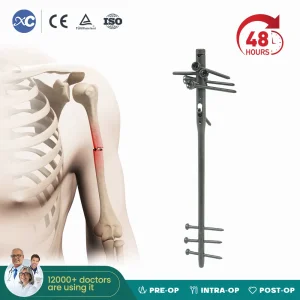
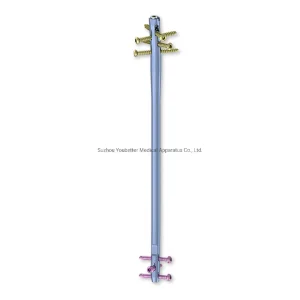
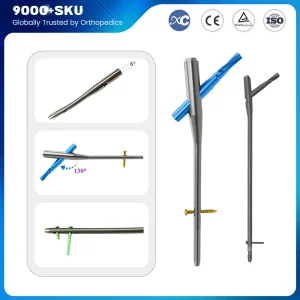
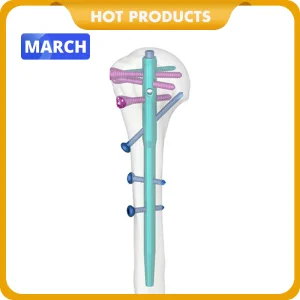
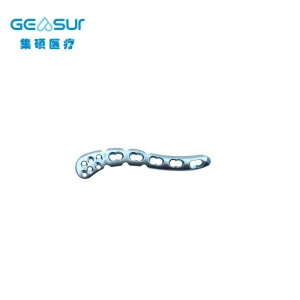
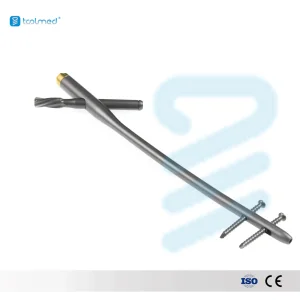
The Proximal Humeral Locking Plate has revolutionized the treatment of complex proximal humerus fractures, particularly in the elderly population where osteoporotic bone quality often leads to high failure rates with traditional fixation methods. As a leading manufacturer in China, we recognize that the global orthopedic market is shifting toward biologically-inspired implants that offer superior mechanical stability. From the United States to Europe and emerging markets in Asia, the demand for high-precision locking compression plates (LCP) is surging.
The current industrial status is characterized by a move towards anatomical pre-contouring. Surgeons no longer want to spend valuable operating time bending plates; they require implants that match the intricate geometry of the greater and lesser tuberosities of the humerus. Our factory utilizes advanced CAD/CAM modeling to ensure that every locking plate we produce offers an optimal fit, reducing soft tissue irritation and improving patient outcomes.
The global proximal humeral locking plate market is projected to grow at a CAGR of over 6% through 2030. This growth is driven by three primary factors: the aging global population, the increase in high-energy trauma cases (such as road traffic accidents), and the technological leap in material sciences. Grade 5 Titanium (Ti-6Al-4V) remains the gold standard due to its excellent biocompatibility and modulus of elasticity, which is closer to human bone compared to stainless steel.
Modern trends are leaning heavily towards AI-integrated surgical planning and 3D-printed patient-specific implants. While mass-produced plates remain the mainstay, the data derived from thousands of CT scans allows us as a manufacturer to refine the hole placement and screw trajectories of our standard Proximal Humeral Locking Plates. The "Locking" mechanism—where the screw head threads into the plate—creates a fixed-angle construct, essential for maintaining reduction in comminuted fractures.
Procurement departments in modern hospitals and large-scale medical distributors have evolved their criteria for selecting a Proximal Humeral Locking Plate supplier. It is no longer just about the price; it is about the "Value-Performance Ratio." Global buyers are looking for partners who can provide comprehensive regulatory documentation (ISO 13485, CE, and FDA compliance), consistent metallurgical quality, and sterile packaging options.
In regions like North America and the EU, the emphasis is on supply chain resilience. As a top China manufacturer, we address this by maintaining a vast inventory and leveraging streamlined logistics. In contrast, in developing regions such as Southeast Asia and Latin America, the focus is often on high-quality implants that can be provided at a cost-effective price point to accommodate varying healthcare budgets without compromising patient safety.
Every batch of our proximal humeral plates undergoes rigorous fatigue testing to ensure they can withstand the repetitive stresses of shoulder motion during the healing phase.
We source only premium medical-grade titanium, ensuring zero toxicity and high corrosion resistance, meeting the most stringent international standards.
Our dedicated regulatory team assists global distributors with product registration, providing all necessary technical files and clinical data summaries.
Our facility represents the pinnacle of Chinese orthopedic manufacturing excellence. We have bridged the gap between high-volume production and artisan-level precision. By choosing us as your Proximal Humeral Locking Plate manufacturer, you gain access to:
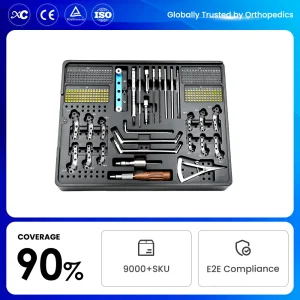
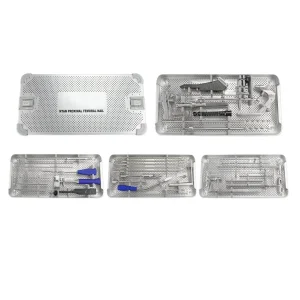
We don't just sell products; we provide a complete orthopedic solution. Our instruments are designed to be intuitive, reducing the surgical "learning curve" and minimizing anesthesia time for the patient.
The application of the Proximal Humeral Locking Plate varies across different medical environments. In a fast-paced urban Trauma Center, the primary need is for a versatile plate system that can handle high-energy comminuted fractures in young adults. Our plates offer multiple distal locking options to provide stability in the humeral shaft while securing the articular fragments.
In Geriatric Orthopedic Units, the challenge is osteoporosis. Traditional screws often pull out of soft bone. Our locking technology creates a "fixed-angle" construct that behaves like an internal-external fixator, significantly reducing the risk of primary and secondary loss of reduction. This allows elderly patients to begin passive motion exercises earlier, preventing frozen shoulder and improving their quality of life.
Furthermore, in Sports Medicine Clinics, where athletes may suffer proximal humerus fractures due to falls or high-impact collisions, the low-profile design of our plates ensures that the implant does not interfere with the delicate mechanics of the rotator cuff or the subacromial space.
The company is committed to producing and selling advanced medical devices, equipment, and disposable medical supplies. Our product range primarily includes the production and sale of instruments for otolaryngology, orthopedics, urology, abdominal surgery, gynecology, and related disposable equipment, as well as sports and fitness equipment. The main focus is on orthopedic devices: implants, mechanical equipment, etc.
Our Products: Urology Instruments; Laparoscopic Instruments; Gynecology Instruments; Otolaryngology Instruments; Orthopedic Instruments; Disposable Instruments; Devices. Our team of experts is dedicated to ensuring that our products meet the highest standards of quality and safety.
Why choose Pure? Our company specializes in the production and sale of medical devices, and we pride ourselves on our commitment to excellence in every aspect of our business. With over 3000+ Square Meters of production space and a reach extending to 20+ countries, we are your reliable partner in medical innovation.
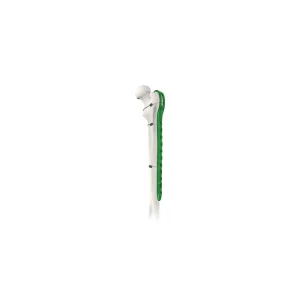
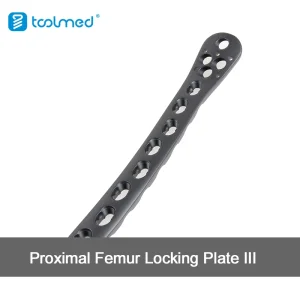
The proximal humerus is a complex region where the rotator cuff muscles exert significant forces. When a fracture occurs, these forces tend to displace fragments, making stable fixation difficult. The Proximal Humeral Locking Plate acts as a bridge. Unlike conventional plates that rely on friction between the plate and the bone, the locking plate-screw construct functions as a single unit. This is particularly advantageous because it does not compress the periosteum, preserving the blood supply crucial for bone healing.
Our designs incorporate several critical features. First, the Divergent Screw Orientation in the humeral head provides a "web-like" grip, maximizing the volume of bone captured. Second, the Calcar Screws—specifically positioned screws in the inferior part of the humeral head—are vital. Clinical studies have shown that calcar support is the single most important factor in preventing varus collapse, a common complication in proximal humeral fractures. We have optimized the entry angles for these screws to ensure they reach the densest bone area.
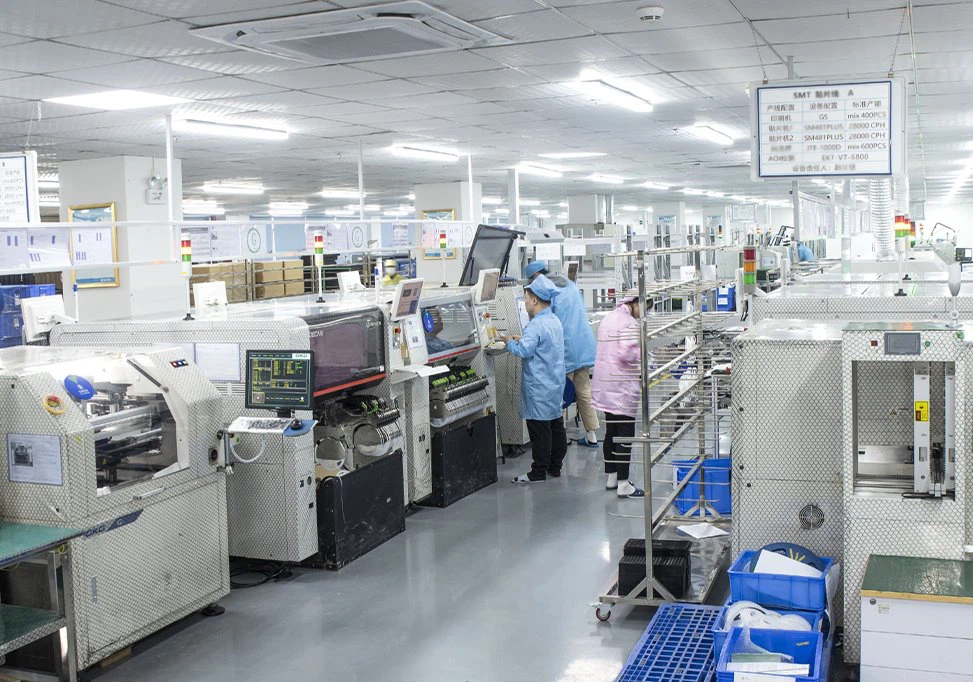
At our China factory, we utilize 5-axis CNC milling machines to create the complex 3D contours required for these plates. Each plate is then subjected to a series of surface treatments. Electropolishing is used to remove any microscopic burrs, while anodization creates a titanium oxide layer that further enhances biocompatibility and color-coding for easy size identification during surgery. We also perform 100% inspection on the locking threads, as even a minor deviation can lead to "cross-threading," a nightmare for surgeons in the OR.
In terms of global sustainability, our manufacturing process has been optimized to reduce waste. We recycle titanium shavings and use eco-friendly cleaning agents, aligning with the growing demand from global healthcare providers for "Green" supply chains. As the industry moves forward, we are also exploring carbon-reinforced PEEK materials and bio-resorbable polymers, ensuring that our partners are always at the forefront of orthopedic technology.
 Pure Orthopedic Implants